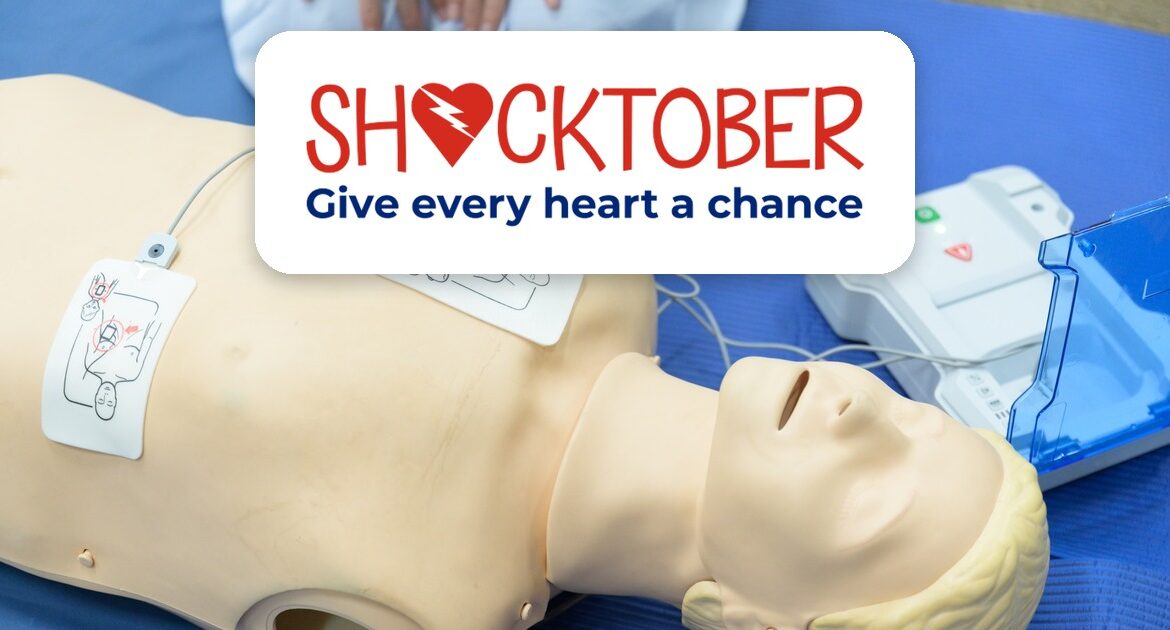
Defibrillators and Shocktober
October is Shocktober – a national reminder that Sudden Cardiac Arrest (SCA) can strike anyone, anywhere, at any age. It doesn’t discriminate between the fit and the unfit, the young and the old. When it happens, the single biggest factor in whether someone survives is how quickly they receive CPR and a shock from a defibrillator.
What is Sudden Cardiac Arrest?
Sudden Cardiac Arrest is not the same as a heart attack. It happens when the heart’s electrical system malfunctions and the heart suddenly stops pumping blood to the brain and body. The person collapses, stops breathing normally and becomes unresponsive within seconds. Without immediate treatment, it is fatal.
A heart attack, by contrast, is a ‘plumbing’ problem where blood flow to part of the heart is blocked. A heart attack can lead to cardiac arrest, but they are different emergencies.
Why every minute matters
For every minute that passes without defibrillation, the chance of survival falls by around 10%. Ambulances do a remarkable job, but in many parts of Australia it can take several minutes for paramedics to arrive – and by then, precious time has been lost. A defibrillator on site, in the hands of a bystander, is what bridges that gap.
The good news is that survival rates can be dramatically higher when a defibrillator is used quickly. Early CPR keeps blood moving; an early shock gives the heart the best chance of restarting.
Anyone can use a modern defibrillator
Today’s Public Access Automated External Defibrillators (AEDs) are designed for ordinary people, not just medical professionals. Once switched on, the unit talks you through every step with clear voice prompts. It will not deliver a shock unless it detects a rhythm that needs one, so you cannot accidentally harm someone by using it. If you can follow a voice instruction, you can save a life.
Why your workplace, club or school needs one
A defibrillator is no longer a ‘nice to have’ – it is becoming an expected part of being prepared. Workplaces, sporting clubs, gyms, schools and community venues all gather numbers of people together, often during physical activity, which is exactly where SCA can occur.
- Workplaces – support your duty of care and give staff and visitors the best chance in an emergency.
- Sporting clubs and gyms – physical exertion is a known trigger; an on-site AED protects players, members and spectators.
- Schools – protect students, staff and the wider community who use your facilities after hours.
Keep a backup ready
If your site already has a defibrillator, consider a second unit as a backup. When seconds count, a flat battery, expired pads or a unit that’s away being serviced can’t help anyone. A backup AED means you are never caught without protection – and it allows you to cover a second location, a field a long way from the clubhouse, or a separate floor of a building.
Looking after your defibrillator
A defibrillator only saves a life if it’s ready to go. Pads and batteries have expiry dates and need to be replaced on schedule. Most modern AED units run regular self-tests and show a clear status indicator, but it still pays to check it routinely and keep a record. Always go by the date printed on the pads and battery. Medical Solution can add you to our ‘Defib Register’ to help keep your AED rescue-ready.
This Shocktober, take a moment to ask: if someone collapsed at your workplace, club or school today, is there a defibrillator within reach – and is it ready? If the answer is no, now is the time to change that.
Source: Australian Resuscitation Council (ANZCOR) guidelines