
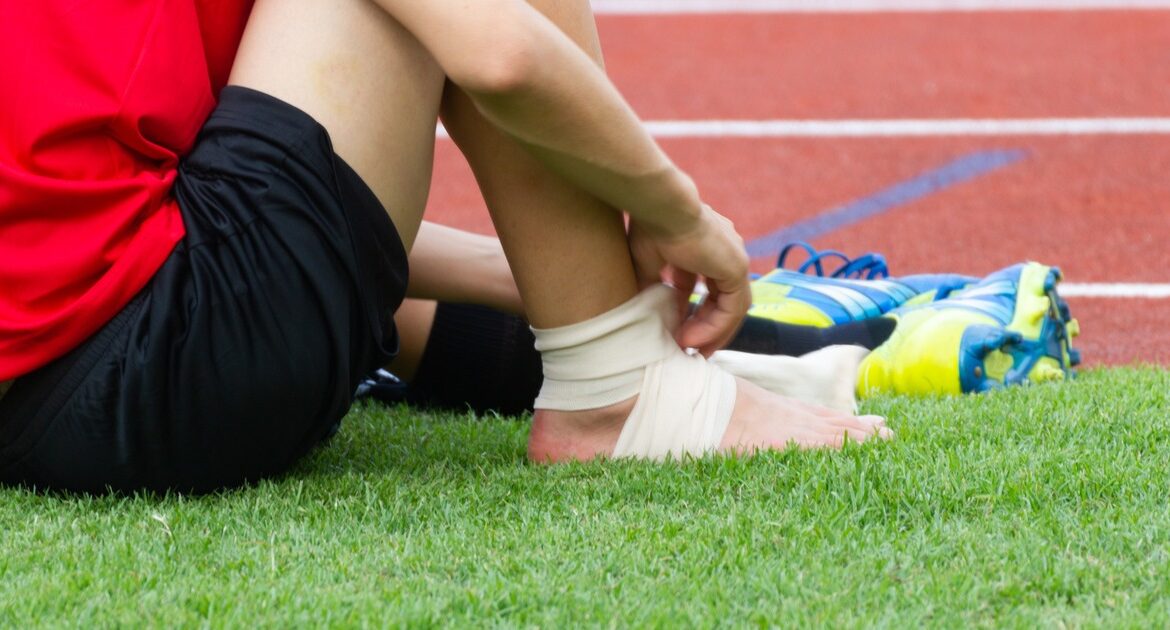
Sport is back in full swing played all year round, and with it come the rolled ankles, corked thighs and pulled muscles that are part and parcel of an active season. Most soft-tissue injuries are not serious, but how you treat them in the first 48–72 hours makes a real difference to how quickly someone gets back on the field.
Sprain or strain – what’s the difference?
A sprain is an injury to a ligament (the tissue that connects bone to bone), commonly in the ankle or knee. A strain is an injury to a muscle or tendon, such as a pulled hamstring or calf. Both cause pain, swelling and reduced movement, and both respond to the same early first aid.
Remember RICER
For the first 48–72 hours after a sprain or strain, follow RICER:
- Rest – stop the activity and protect the injured area from further damage.
- Ice – apply a cold or ice pack for 15–20 minutes every 2 hours (Instant ice can be applied directly on bare skin).
- Compression – apply a firm (not tight) elastic bandage to help limit swelling.
- Elevation – raise the injured limb above heart level where possible.
- Referral – see a health professional for a proper diagnosis and recovery plan.
Just as important – avoid HARM
For the same first 48–72 hours, avoid the things that make swelling and bleeding worse. No Heat, no Alcohol, no Running or activity, and no Massage. These can all increase swelling and slow healing in the early stage of an injury.
When to seek urgent help
Most sprains and strains settle with good early care, but some need medical attention. Seek help if the person can’t bear weight or use the limb, if there is severe pain, numbness or obvious deformity, if the joint looks out of place, or if swelling and pain are not improving after a few days. When in doubt, get it checked.
Be ready on the sideline
Whether you run the canteen or the coaching whistle, a well-stocked first aid kit and a few instant ice packs mean you can respond straight away. Being prepared keeps your players safe – and keeps minor injuries from turning into longer time on the bench.
Source: Better Health Channel and Sports Medicine Australia